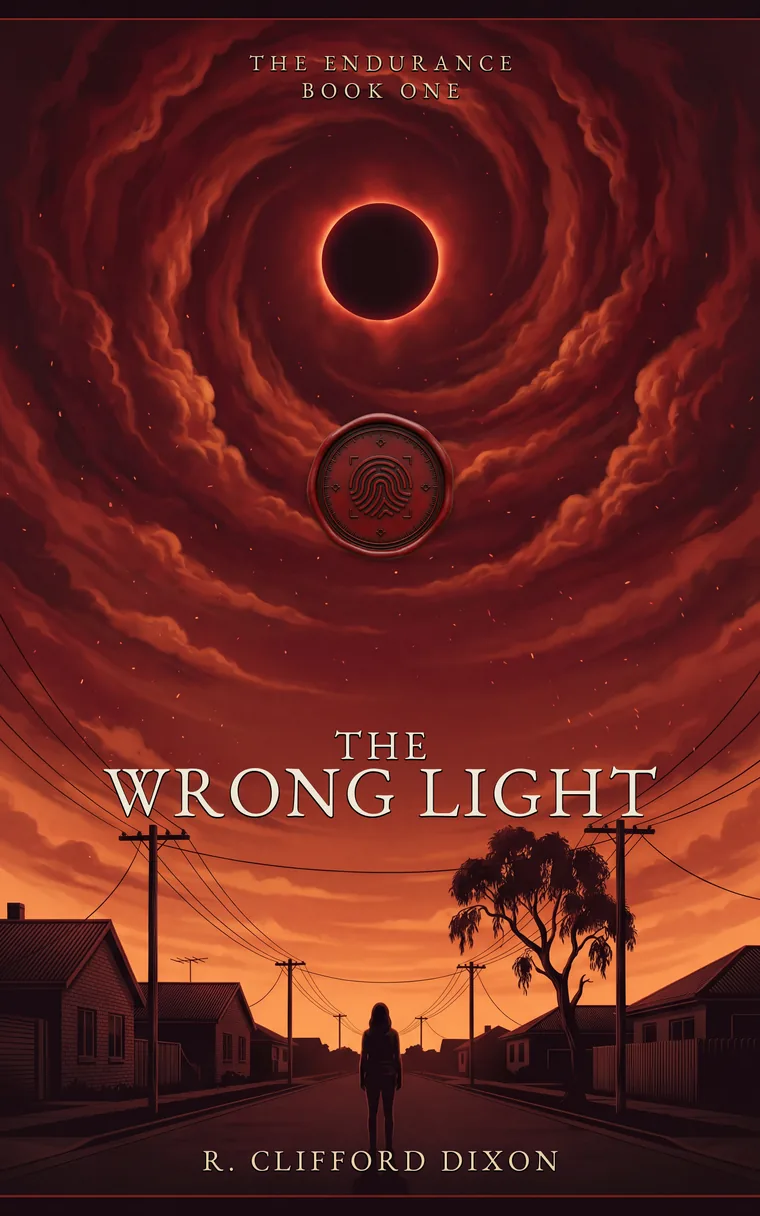
Book One
The Wrong Light
An ash-choked sky and a sun blackened at noon. The good life, quietly taken — one card, one login, one reasonable step at a time.
Coming soon
An ordinary nurse. An ordinary faith. A world sliding, by degrees and good intentions, into something it will not name.
Book One · The Wrong Light
A complete short story. No cost. Yours to keep.
A 15-second look at the free prequel — Thessaloniki, 1941.
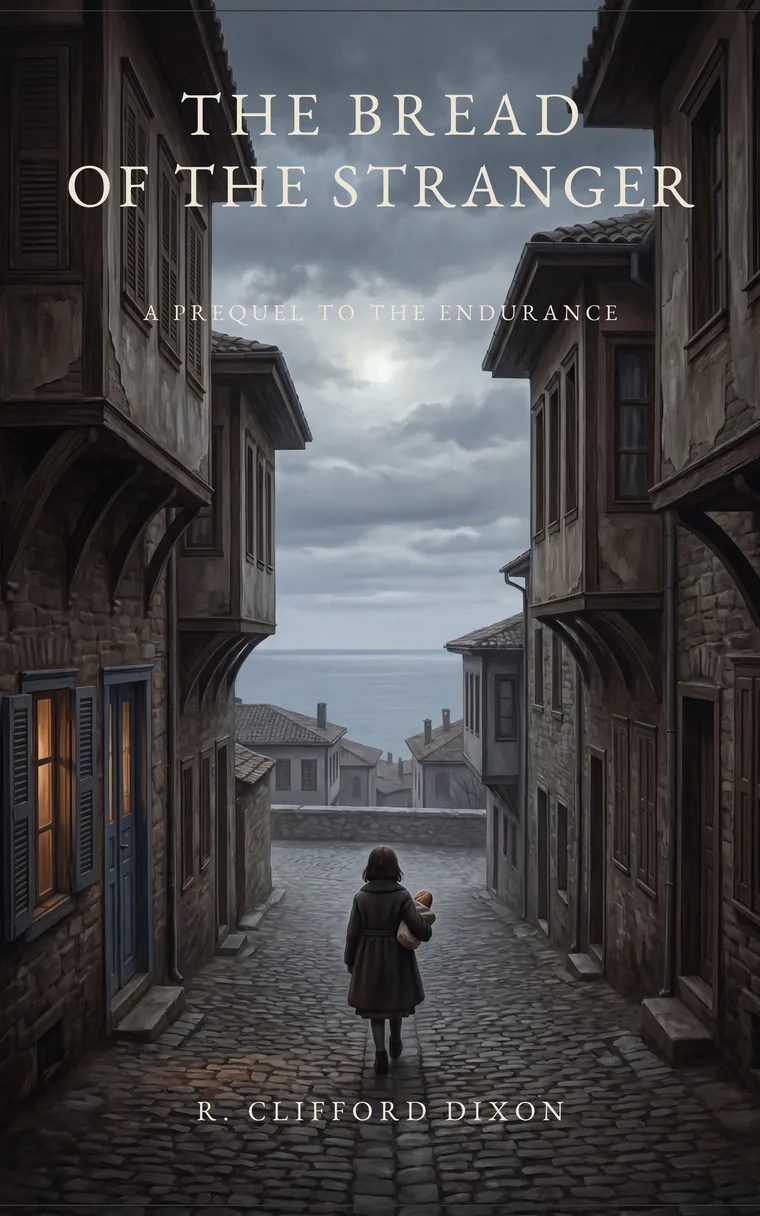
Thessaloniki, the hunger winter of 1941. Two girls grow up four steps apart across the same courtyard — one Greek, one Jewish — in a city being asked, very politely, to make itself known and counted. A complete short story, and the seed of everything the trilogy is about: how the worst things arrive wearing the face of mercy, and how an ordinary kindness becomes the only thing that endures.
Join the readers' list: the prequel now, then new writing, the maps, the people and the world behind the trilogy. No spam; leave whenever you like.
A near-future Australia tips, seal by seal, out of the ordinary and into the tribulation — told close, plain, and human, through the people of one outer-suburban corridor. The titles run light → star → fire.
An ash-choked sky and a sun blackened at noon. The good life, quietly taken — one card, one login, one reasonable step at a time.
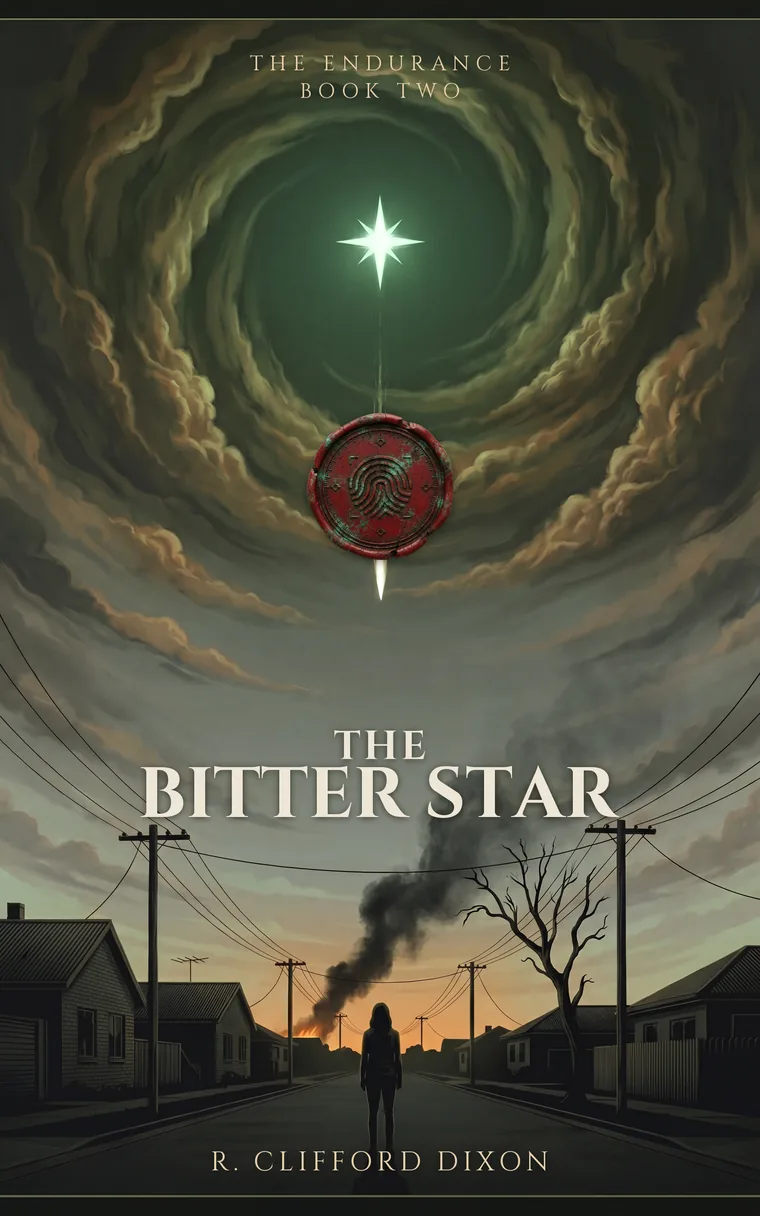
A sickened green-bronze sky and one searing star low on the horizon. The asking becomes a demand, and the cost comes due.
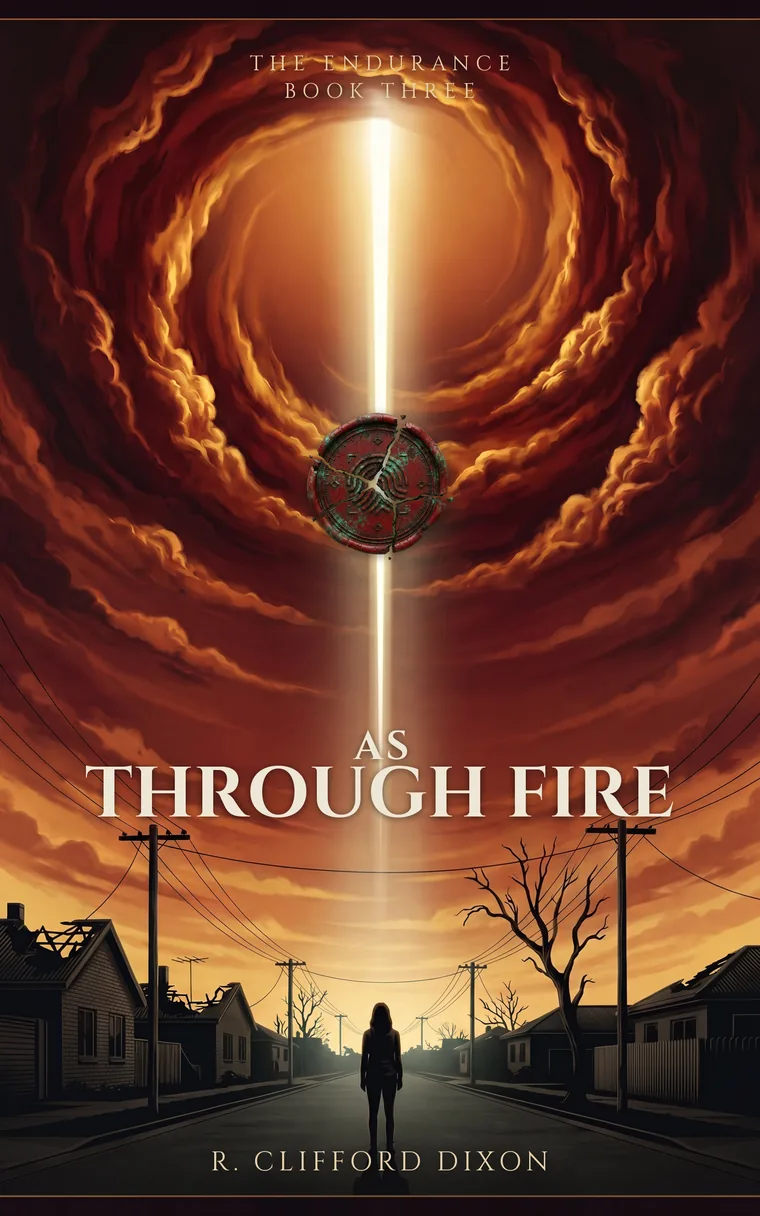
A molten sky splitting open, and one clean shaft of light breaking through. The end of wrath resolving into a hard-won dawn.
The trilogy is built on real places and a real reading of an old text. This is where the world opens up — added to as the books arrive.
The hand-inked city of the prequel — with the trilogy's corridor to come.
The prequel's two families, as the old photographs Despina carried.
The courtyard, the basilica, the road west — the real ground underfoot.
The reading of Revelation the story is built on — in plain language.
R. Clifford Dixon writes literary fiction about ordinary people and the slow pressure of extraordinary times.
The Endurance grew out of a simple, uncomfortable question: if the worst arrived not with horns but with kindness, with order, with a better and fairer system — would we see it? And what would faith look like if it did?
He writes from a concern for the body of Christ, and from the conviction that God is not willing that any should perish. Drawing on his own Christian upbringing and the years of life since, he offers these books not as a timeline or a dogmatic sequence of events, but as a possibility — a thought-provoker, a conversation-starter. The series has been a long time in the making; he believes the time is now right.
"I have fought the good fight, I have finished the race, I have kept the faith."
The free prequel now; then the new writing, the art, and the launch, straight to your inbox. First the bread, then the book.